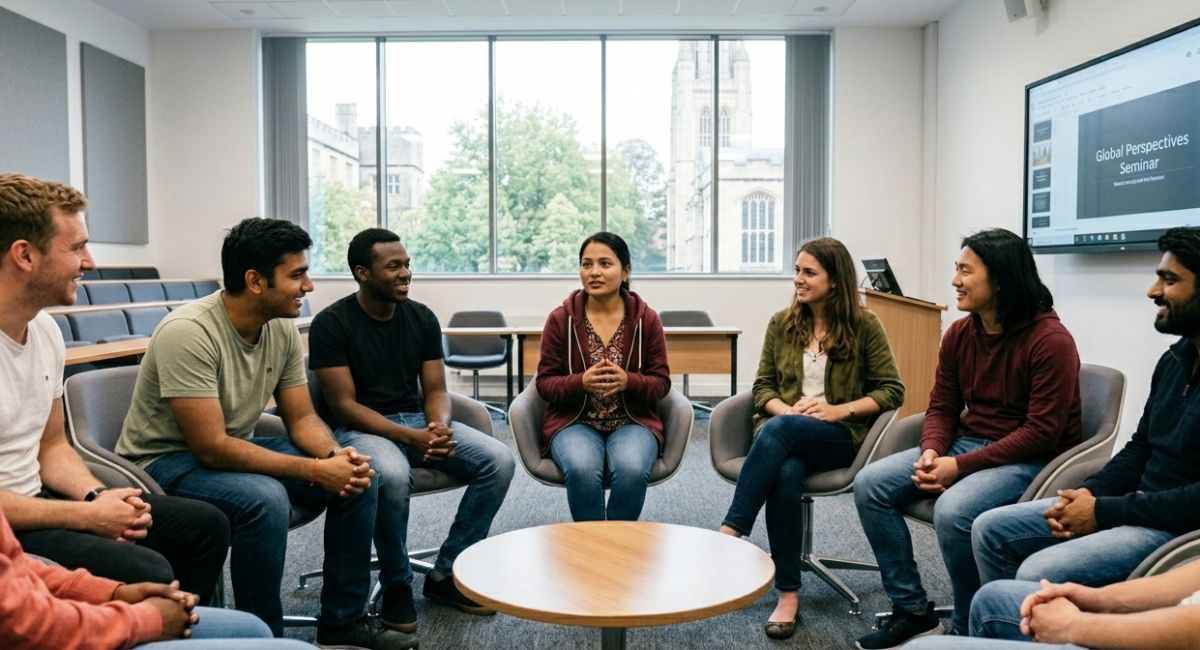
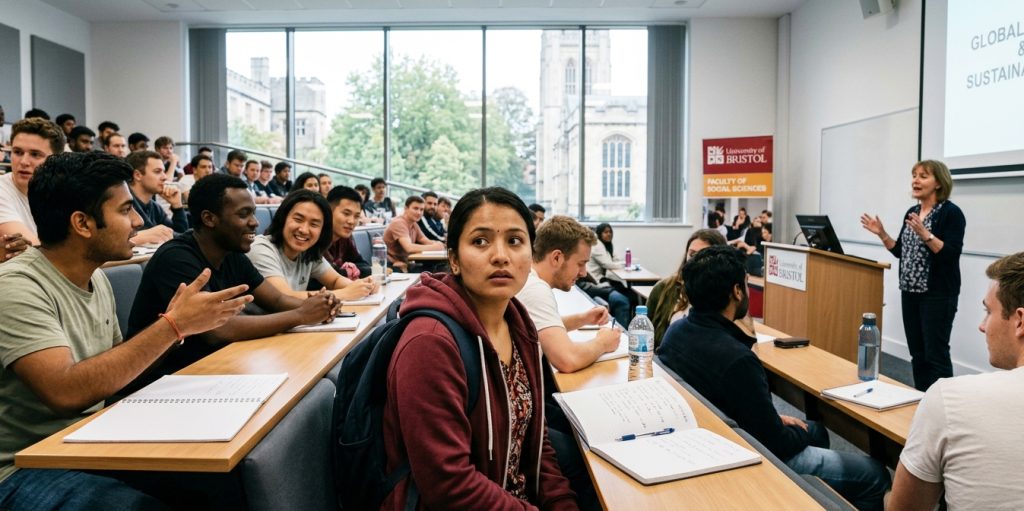
British and Nepal classroom setups are vastly different. A lecturer walks in with coffee in one hand and slides on the screen behind him. Students speak without raising their hands. Somebody disagrees with the teacher openly. Another student jokes during discussion and nobody seems offended. The entire thing may feel loose and unfamiliar.
For a majority of Nepali students, the atmosphere inside the classroom can feel overwhelming at first. In Nepal, many students are educated in places where silence shows respect and teachers lead every part of the lesson. In stark contrasts, Britain’s classrooms often move through discussion and debate. Students are expected to speak. They are expected to question things. Sometimes they are even expected to challenge ideas directly.
The difference can unsettle students during the first few weeks. Some begin to wonder if they are too quiet. Others feel nervous every time a lecturer asks for opinions. A few simply sit back and watch the room carefully until they understand how things work. With time, most students settle into the system. The habits that once felt strange become ordinary. Some even discover they enjoy the freedom of it.
Students Are Expected to Speak Up
In many Nepali classrooms, students often listen quietly while the teacher explains everything. Interrupting teachers with questions may feel disrespectful to some students. In British classrooms, the situation is very different.
Lecturers usually expect students to ask questions and join discussions. Silence is sometimes interpreted as lack of interest or preparation. Class participation is vital. This creates confusion for many Nepali students during the early weeks. They may understand the lesson perfectly yet still hesitate to participate. British lecturers, however, often value engagement as much as correct answers.
Teachers Prefer Critical Thinking
Students from Nepal reach the UK after years of exam preparation that focused heavily on memorisation. Remembering facts, definitions, notes, and textbook explanations often played a major role in academic success. By contrast, British universities place much greater importance on analysis and opinion.
Instead of asking students to repeat information, lecturers may ask questions like:
- Why do you agree with this theory?
- What are the weaknesses of this argument?
- How would this idea apply in real life?
- Which source is more reliable and why?
At first, this can feel uncomfortable because there may not always be a single “correct” answer. Students are expected to explain their reasoning clearly and support their opinions with evidence. This shift takes time, especially for students who are academically strong yet unfamiliar with analytical writing.
Calling Teachers by Their First Name Feels Strange
One of the biggest cultural surprises for Nepali students is how informal communication can feel in the UK. Back home, teachers are often addressed with titles that show strong respect. In British universities, some lecturers introduce themselves using only their first names. They may even encourage students to email them casually.
For a Nepali student, calling a professor “David” or “Sarah” instead of “Sir” or “Madam” can initially feel uncomfortable. The good news is that British lecturers generally understand international students may need time to adjust. Respect still matters deeply in UK classrooms. The style of communication simply feels more relaxed.
Group Discussions Happen Frequently
Many courses in the UK involve pair work, seminars, presentations, and group discussions. Students may suddenly find themselves discussing topics with classmates from several different countries.
This becomes challenging for some Nepali students because they have to deal with different accents that can be challenging to understand. In the UK, people might speak English very quickly. Additionally, students are expected to share opinions immediately.
During the beginning, many students prefer staying quiet and listening carefully. After some practice, confidence usually improves naturally. These discussions eventually become one of the most valuable parts of studying abroad because students gain communication skills alongside academic knowledge.
Independent Study Is Extremely Important
A common misunderstanding among new international students is assuming lectures alone will be enough. In reality, British universities expect students to study independently for many hours outside class. Lecturers provide guidance, readings, and direction, yet students are responsible for deeper research and preparation. Unlike school systems where teachers closely monitor progress, UK universities often expect students to manage:
- Assignment deadlines
- Research
- Reading schedules
- Revision plans
- Attendance
Attendance Rules Can Surprise Students
Some Nepali students assume university attendance will be flexible because classes feel less strict than school environments. Later, they discover that attendance is monitored carefully, especially for international students on student visas. Missing too many classes may lead to warnings or even immigration-related concerns. British universities often treat students like independent adults. This freedom comes with serious responsibility.
Plagiarism Is Taken Very Seriously
Academic writing rules in the UK can shock students who are unfamiliar with citation systems. Even accidental copying may be treated as plagiarism. Universities expect students to reference sources properly whenever ideas, statistics, or quotations come from books, journals, or websites.
Many Nepali students initially struggle with referencing style and citation rules. They can also have trouble with Academic paraphrasing and research methodologies. Fortunately, universities provide workshops and academic support services to help international students learn these skills.
Classroom Diversity Feels Completely Different
British universities bring together students from many cultures, age groups, and professional backgrounds. A single classroom may include someone fresh from school and also working professionals. But the most amazing aspect of British classrooms is the amount of international students present. Opinions, accents, and communication styles vary greatly. This becomes one of the most eye-opening parts of studying abroad. It helps students become more open-minded, adaptable, and globally aware.
For students who choose higher education in the UK, the first few weeks can feel unfamiliar and difficult. Nepali students often notice major differences in classroom culture and academic expectations after they arrive to study in the UK from Nepal. The system may seem confusing at first, especially for students who come from more traditional classroom environments. This adjustment period is completely normal. With time, the uncertainty fades, confidence grows, and the experience of studying in the UK helps students develop both academically and personally.