student success in the UK

Why Some Students Thrive in the UK while Others Struggle

Studying in the UK guarantees a respected degree, building better career opportunities, gaining international exposure, and creating a more stable life for themselves and their families. Nepal students begin their journey to the UK with these aspirations. They may attend comparable universities and face the same academic system. However, after a few months, major differences begin to appear. Some students gradually become confident, independent, socially active, and academically stable, while others start feeling overwhelmed, isolated, financially stressed, or emotionally exhausted. In many cases, students who performed exceptionally well in Nepal struggle far more than expected after moving abroad. The reasons behind this difference usually have far less to do with intelligence and far more to do with adjustment, mindset, habits, emotional resilience, and expectations.

Expectations and Experience

One of the biggest factors that mold a student’s experience in the UK involves expectations before arrival. A majority of students develop unrealistic ideas about life abroad after watching social media content or listening to carefully edited success stories from relatives and friends. Student life in the UK is mainly imagined as a combination of freedom, easy income, travel, and exciting experiences. The reality often feels far more demanding. Students suddenly need to manage university deadlines, part-time work, financial pressure, cooking, cleaning, loneliness, and time management simultaneously. Those who arrive with a more realistic understanding of the challenges involved usually adapt more smoothly. Students expecting immediate comfort struggle emotionally when life abroad feels more difficult than they imagined.

Adaptability Matters More

Adaptability plays a major role in determining how comfortably students settle into life in the UK. Some students appear extremely confident before departure but find it difficult to cope once familiar routines disappear. Others arrive nervous and uncertain yet slowly build stable and successful lives because they adapt well to change. Everyday life abroad introduces students to unfamiliar situations constantly, including different communication styles, independent academic systems, cultural differences, and new responsibilities. Students who remain flexible and open-minded usually recover from setbacks more easily, while those who resist change often remain frustrated for longer periods. In many situations, adaptability becomes more important than academic ability itself.

Loneliness Affects Students Differently

Loneliness and homesickness affect students very differently. Nearly every international student experiences emotional difficulty at some stage, especially during the first year abroad. Some students actively build friendships and support systems that help them adjust over time. Others isolate themselves quietly and spend most of their time alone outside classes or work. Small habits often make a surprisingly large difference. Students who leave their rooms regularly, participate in activities, maintain healthy communication with family, and slowly build friendships usually cope better emotionally. Those who remain socially disconnected for long periods often experience greater stress and increasing emotional exhaustion. In the age of internet and mobile gaming, going out and socializing have become challenging.

Financial Pressure Changes Student Life Significantly

Financial pressure creates a major challenge for many Nepali students. Some arrive in the UK with realistic budgets and stable family support, while others feel immediate pressure to recover expenses through part-time work. This often creates an unhealthy cycle where students prioritize earning money over sleep, academic performance, health, and emotional wellbeing. Part-time jobs in restaurants, warehouses, hotels, or retail sectors can become physically exhausting, especially when combined with university responsibilities. Students who manage finances carefully and maintain healthier routines generally adjust more successfully over time.

Academic Success in Nepal Vs the UK

Academic adjustment surprises many Nepali students after arriving in the UK. Students who achieved excellent results in Nepal sometimes struggle initially because the British education system focuses heavily on independent learning, research, critical thinking, academic writing, presentations, and referencing systems. Memorization alone is rarely enough. Some students mistakenly interpret lower early grades as failure when they are actually experiencing a normal adjustment process within a completely different academic culture. Students who remain patient, seek feedback, and gradually improve their academic skills often perform much better later in their studies.

Comparison is the thief of Joy

Another hidden reason many students struggle involves constant comparison with others. Students compare jobs, salaries, lifestyles, grades, travel experiences, and social lives far more than people realise. Social media often worsens this problem because most students only share successful or exciting moments online. Very few people publicly discuss loneliness, stress, financial difficulty, exhaustion, or emotional pressure. Students who constantly compare themselves with others may begin feeling unsuccessful even when they are progressing normally within their own journey.

Routine Is More Important than Motivation

Routine and discipline influence student success more than motivation alone. Many students believe they simply need to remain motivated in order to succeed abroad. In reality, stable routines usually matter far more. Students who thrive often develop simple but consistent habits involving sleep schedules, study hours, meal preparation, budgeting, work shifts, and personal time. Life abroad can become chaotic very quickly without structure. Students who create balanced daily routines usually experience lower stress and greater emotional stability.

Asking for Help Is Extremely Important

An important difference between students who adapt successfully and those who struggle involves willingness to seek help. Some students suffer quietly because they fear appearing weak, unsuccessful, or incapable. Yet universities in the UK usually provide extensive support services including academic guidance, counselling, career advice, mental health support, and international student assistance. Students who seek help early often recover from difficulties much faster, while those who hide problems for long periods may feel increasingly isolated and overwhelmed.

The difference between students who thrive in the UK and those who struggle rarely depends on intelligence alone. More often, it comes down to expectations, adaptability, emotional resilience, routines, financial balance, and willingness to grow through discomfort. Higher Education in the UK is difficult and almost every international student faces difficult moments at some stage of their journey. Feeling overwhelmed occasionally does not mean someone is failing. Adjustment is rarely smooth from beginning to end. For many Nepali students, studying in the UK eventually becomes one of the most important periods of personal growth they will ever experience. The students who succeed are often not the ones who avoid challenges entirely, but the ones who slowly learn how to handle them.


Things Nepali Parents Should Know Before Sending Their Children to the UK2

Things Nepali Parents Should Know Before Sending Their Children to the UK

In countless homes across Nepal, conversations about the UK often begin long before any university application is submitted. They emerge gradually through discussions about education, career security, financial stability, and the kind of future parents hope their children will have. Over time, studying abroad stops feeling like a distant idea and starts becoming a family goal formed by planning and expectation.

Parents spend years saving money, researching universities, speaking to consultancies, and preparing themselves emotionally for the day their son or daughter finally leaves Nepal. Alongside the excitement of new opportunities comes a deep sense of worry. Many parents quietly wonder whether their child will adjust properly to life in the UK, remain safe in an unfamiliar environment, stay focused on studies, and cope with the loneliness that often comes with living far away from family for the first time.

These concerns are completely normal. The UK offers excellent educational opportunities, global exposure, and valuable life experience. At the same time, life abroad can feel very different from life in Nepal, especially during the first few months.

Here are some important things Nepali parents should understand before sending their children to the UK.

1. The First Few Months Are Usually the Hardest

Most parents imagine that students quickly settle into a comfortable routine after arriving in the UK, yet the reality is often far more challenging during the early months. Students suddenly find themselves adapting to a completely new country, unfamiliar weather, independent living, academic pressure, cooking and cleaning responsibilities, financial management, and homesickness all at once. Even students who appear confident may struggle quietly during this adjustment period. Parents should understand that emotional ups and downs are extremely common during the first semester, and stress does not necessarily mean the student made the wrong decision. A majority of students from Nepal gradually become more comfortable with time, routine, and the entire experience. During this stage, reassurance and emotional support from family can make a significant difference. Support and patience from family matter greatly during this stage.

2. UK Education Is Very Different from Nepal

Higher Education in the UK feels very different from what many Nepali students are accustomed to. UK universities expect students to become independent learners who can manage their own studies responsibly. Teachers usually guide students rather than closely monitor every aspect of their academic progress. Classroom interaction, attendance systems, assignment structures, and assessment methods may therefore feel unfamiliar at first. Students are often expected to think critically, complete research-based assignments, study independently outside class hours, and participate actively in presentations and group discussions. Universities also maintain strict plagiarism policies, which can initially surprise many students. Because of these differences, some students experience difficulty adjusting during the first few months. Parents should avoid assuming that lower grades at the beginning indicate failure, as adapting to a new academic environment often takes time and practice.

3. Part-Time Work Exists, Yet It Is Not Always Easy

One of the most common misunderstandings among families concerns part-time jobs in the UK. Although international students are allowed to work during their studies, many parents develop unrealistic expectations after hearing success stories from relatives or friends. In reality, part-time work can be physically and mentally demanding. Students often work in restaurants, retail stores, warehouses, hotels, delivery services, or care sectors, where shifts may be long and exhausting. Students must balance late-night work schedules alongside university deadlines and academic responsibilities. While some students secure jobs quickly, others may spend several months searching before finding stable work. Parents should therefore avoid placing immediate financial expectations on students after arrival. Academic stability, physical health, and mental wellbeing should always remain priorities.

4. Living Costs Are Higher Than Many Families Expect

Many families focus primarily on tuition fees in the UK during preparation, yet living expenses in the UK can also become a major financial responsibility. Students must manage accommodation costs, food, transportation, mobile and internet bills, winter clothing, study materials, deposits, and occasional emergency expenses. Living in the UK, especially in cities like London, can become especially high. Some students hesitate to discuss financial difficulties openly because they worry about causing stress for their parents back home. For this reason, honest communication within families becomes very important. Parents should prepare realistic financial plans before departure instead of relying entirely on the assumption that part-time jobs will cover most expenses.

5. Loneliness Can Affect Students More Than Parents Realize

During video calls home, many students try to appear cheerful and emotionally stable, which can lead parents to believe everything is going smoothly. However, homesickness affects almost every international student at some stage. Familiar aspects of daily life such as family meals, Nepali festivals, close friends, familiar language, and regular routines suddenly become deeply emotional. The colder weather and shorter daylight hours in the UK can also affect mood, especially during winter. Parents should encourage regular communication without creating additional pressure or expectations. In many situations, students simply need reassurance that loneliness and emotional struggles are temporary parts of the adjustment process.

6. Students Become More Independent Very Quickly

One positive change many parents eventually notice is a strong increase in maturity and independence. Living abroad forces students to manage responsibilities on their own, often for the first time in their lives. Over time, students learn valuable life skills such as time management, budgeting, cooking, problem-solving, communication, and self-discipline. Living independently teaches responsibilities that many young people may not fully experience while living at home in Nepal. Although some parents initially feel emotional about their children becoming less dependent, this independence often helps students grow into more confident, capable, and responsible adults.

7. Safety and Laws in the UK Are Taken Seriously

The UK is generally considered a safe destination for international students, particularly around university areas. Still, students must understand local laws and personal responsibilities carefully. Parents should regularly remind students to follow visa regulations properly, avoid illegal work arrangements, respect university policies, remain cautious while travelling, manage social situations responsibly, and protect personal belongings carefully. Simple awareness and responsible behaviour can help students avoid many unnecessary difficulties during their stay abroad.

8. Social Media Rarely Shows the Full Reality

Many Nepali families unintentionally compare their child’s experience abroad with carefully edited content they see online. Photos showing travel, restaurants, shopping, and social activities can create unrealistic expectations about student life in the UK. Behind those images, however, many students are quietly balancing assignments, financial pressure, exhausting work schedules, stress, and fatigue. Parents should therefore avoid constantly comparing their children with others. Every student experiences a different journey, and success rarely looks identical from one person to another.

9. Emotional Support Matters More Than Constant Pressure

Many international students already place significant pressure on themselves to succeed academically and financially. Repeated questions about jobs, earnings, grades, or comparisons with other students can sometimes increase anxiety further. Although parents naturally worry about their child’s future, encouragement and emotional reassurance are often more helpful than constant pressure. Students usually perform better when they feel trusted, understood, and emotionally supported by their families.

10. Studying in the UK Changes Students Beyond Academics

Parents often focus mainly on degrees, qualifications, and career outcomes, yet studying abroad also changes students personally in many important ways. Many students return from the UK more independent, confident, adaptable, and globally aware than before. They often develop stronger communication skills, greater maturity, and a broader understanding of different cultures and perspectives. These personal changes may not always appear immediately, yet they frequently shape long-term personal and professional growth in meaningful ways.

Things Nepali Parents Should Know Before Sending Their Children to the UK

Sending a child to the UK is a deeply emotional journey for many parents where uncertainty, sacrifice, ambition, and long-term dreams play a vital role behind such decisions. Challenges will almost certainly appear along the way, and adjustment often takes time. Students may face stressful periods, make mistakes, or struggle emotionally during certain stages of their journey. Despite these difficulties, studying in the UK becomes one of the most transformative experiences of many students’ lives. Throughout this process, the strongest support parents can provide is patience, trust, understanding, and consistent encouragement rather than constant pressure for perfection.

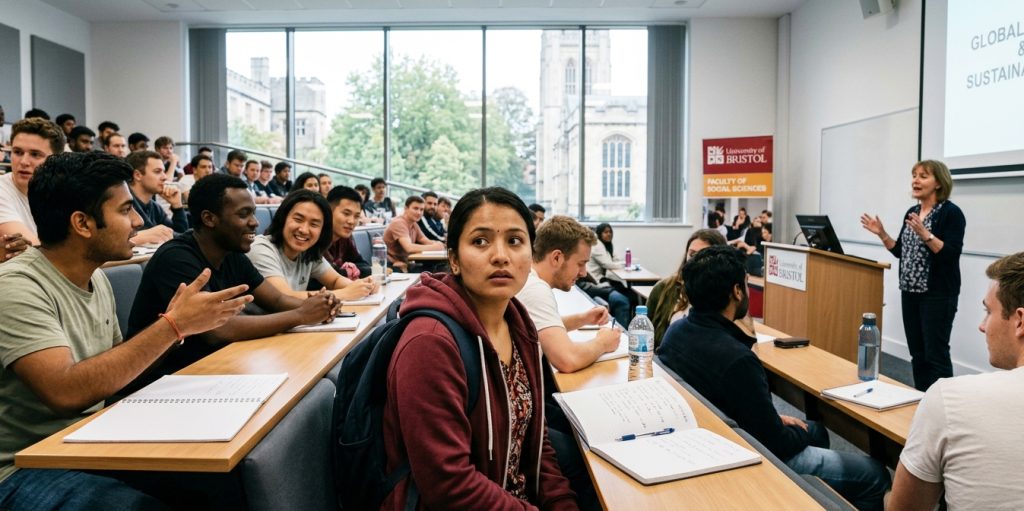
British Classroom Habits That Confuse Nepali Students at First

British Classroom Habits That Confuse Nepali Students at First

British and Nepal classroom setups are vastly different. A lecturer walks in with coffee in one hand and slides on the screen behind him. Students speak without raising their hands. Somebody disagrees with the teacher openly. Another student jokes during discussion and nobody seems offended. The entire thing may feel loose and unfamiliar.

For a majority of Nepali students, the atmosphere inside the classroom can feel overwhelming at first. In Nepal, many students are educated in places where silence shows respect and teachers lead every part of the lesson. In stark contrasts, Britain’s classrooms often move through discussion and debate. Students are expected to speak. They are expected to question things. Sometimes they are even expected to challenge ideas directly.

The difference can unsettle students during the first few weeks. Some begin to wonder if they are too quiet. Others feel nervous every time a lecturer asks for opinions. A few simply sit back and watch the room carefully until they understand how things work. With time, most students settle into the system. The habits that once felt strange become ordinary. Some even discover they enjoy the freedom of it.

Students Are Expected to Speak Up

In many Nepali classrooms, students often listen quietly while the teacher explains everything. Interrupting teachers with questions may feel disrespectful to some students. In British classrooms, the situation is very different.

Lecturers usually expect students to ask questions and join discussions. Silence is sometimes interpreted as lack of interest or preparation. Class participation is vital. This creates confusion for many Nepali students during the early weeks. They may understand the lesson perfectly yet still hesitate to participate. British lecturers, however, often value engagement as much as correct answers.

Teachers Prefer Critical Thinking

Students from Nepal reach the UK after years of exam preparation that focused heavily on memorisation. Remembering facts, definitions, notes, and textbook explanations often played a major role in academic success. By contrast, British universities place much greater importance on analysis and opinion.

Instead of asking students to repeat information, lecturers may ask questions like:

  • Why do you agree with this theory?
  • What are the weaknesses of this argument?
  • How would this idea apply in real life?
  • Which source is more reliable and why?

At first, this can feel uncomfortable because there may not always be a single “correct” answer. Students are expected to explain their reasoning clearly and support their opinions with evidence. This shift takes time, especially for students who are academically strong yet unfamiliar with analytical writing.

Calling Teachers by Their First Name Feels Strange

One of the biggest cultural surprises for Nepali students is how informal communication can feel in the UK. Back home, teachers are often addressed with titles that show strong respect. In British universities, some lecturers introduce themselves using only their first names. They may even encourage students to email them casually.

For a Nepali student, calling a professor “David” or “Sarah” instead of “Sir” or “Madam” can initially feel uncomfortable. The good news is that British lecturers generally understand international students may need time to adjust. Respect still matters deeply in UK classrooms. The style of communication simply feels more relaxed.

Group Discussions Happen Frequently

Many courses in the UK involve pair work, seminars, presentations, and group discussions. Students may suddenly find themselves discussing topics with classmates from several different countries.

This becomes challenging for some Nepali students because they have to deal with different accents that can be challenging to understand. In the UK, people might speak English very quickly. Additionally, students are expected to share opinions immediately.

During the beginning, many students prefer staying quiet and listening carefully. After some practice, confidence usually improves naturally. These discussions eventually become one of the most valuable parts of studying abroad because students gain communication skills alongside academic knowledge.

Independent Study Is Extremely Important

A common misunderstanding among new international students is assuming lectures alone will be enough. In reality, British universities expect students to study independently for many hours outside class. Lecturers provide guidance, readings, and direction, yet students are responsible for deeper research and preparation. Unlike school systems where teachers closely monitor progress, UK universities often expect students to manage:

  • Assignment deadlines
  • Research
  • Reading schedules
  • Revision plans
  • Attendance

Attendance Rules Can Surprise Students

Some Nepali students assume university attendance will be flexible because classes feel less strict than school environments. Later, they discover that attendance is monitored carefully, especially for international students on student visas. Missing too many classes may lead to warnings or even immigration-related concerns. British universities often treat students like independent adults. This freedom comes with serious responsibility.

Plagiarism Is Taken Very Seriously

Academic writing rules in the UK can shock students who are unfamiliar with citation systems. Even accidental copying may be treated as plagiarism. Universities expect students to reference sources properly whenever ideas, statistics, or quotations come from books, journals, or websites.

Many Nepali students initially struggle with referencing style and citation rules. They can also have trouble with Academic paraphrasing and research methodologies.  Fortunately, universities provide workshops and academic support services to help international students learn these skills.

Classroom Diversity Feels Completely Different

British universities bring together students from many cultures, age groups, and professional backgrounds. A single classroom may include someone fresh from school and also working professionals. But the most amazing aspect of British classrooms is the amount of international students present.  Opinions, accents, and communication styles vary greatly. This becomes one of the most eye-opening parts of studying abroad. It helps students become more open-minded, adaptable, and globally aware.

For students who choose higher education in the UK, the first few weeks can feel unfamiliar and difficult. Nepali students often notice major differences in classroom culture and academic expectations after they arrive to study in the UK from Nepal. The system may seem confusing at first, especially for students who come from more traditional classroom environments. This adjustment period is completely normal. With time, the uncertainty fades, confidence grows, and the experience of studying in the UK helps students develop both academically and personally.

UK Degrees that Nepali Students Ignore but Employers Actually Value

UK Degrees that Nepali Students Ignore but Employers Actually Value

For years, Nepali students planning to study in the UK have followed a familiar pattern. Business, Computing, Nursing, and MBA programmes continue to dominate applications from Nepal. These courses remain popular for good reasons. They are widely recognised, flexible, and often linked to stable career opportunities.

However, there is another side to the story that many students rarely hear about.

Across the UK and in many western countries, employers are actively searching for graduates in specialised fields where there is less competition and growing demand. Many of these degrees receive far less attention from Nepali students, despite offering strong salaries, excellent career progression, and valuable long-term opportunities.

Higher Education in the UK becomes valuable through smart academic decisions. And that comes from identifying industries that are growing quietly in the background.

Here are some UK degrees that Nepali students often overlook, even though employers highly value them.

1. Supply Chain and Logistics Management

Most students never consider this field until they realise how important global transportation and distribution systems have become.

Every product people use passes through a supply chain. From food and medicine to electronics and clothing, businesses depend on professionals who can manage purchasing, inventory, transportation, and delivery systems efficiently.

After the pandemic, companies across the world started investing heavily in stronger logistics systems. As a result, demand for skilled professionals increased significantly.

Why employers value this degree

  • Strong demand across multiple industries
  • Important role in international business
  • Practical skills with direct workplace relevance
  • Opportunities in management and operations

Career options

  • Supply Chain Analyst
  • Logistics Coordinator
  • Procurement Officer
  • Operations Manager
  • Inventory Planner

Why it suits Nepali students
Students with analytical thinking, organisational ability, and communication skills often perform very well in this field. The degree also combines business knowledge with practical decision-making.

2. Cybersecurity

Many students choose general Computing or IT courses. Cybersecurity, however, focuses on one of the fastest-growing areas in the technology industry.

As businesses store more information online, digital security has become a major concern. Governments, banks, universities, hospitals, and multinational companies constantly search for professionals who can protect systems and data.

This field continues to grow every year.

Why employers value this degree

  • Global shortage of cybersecurity professionals
  • High salary potential
  • Strong demand in both public and private sectors
  • Increasing importance of data protection

Career options

  • Cybersecurity Analyst
  • Ethical Hacker
  • Information Security Officer
  • Network Security Engineer
  • Digital Risk Consultant

Important point for students
Cybersecurity requires patience and technical interest. Students who enjoy problem-solving and system analysis often adapt well to this course.

3. Data Analytics and Business Intelligence

Modern businesses rely heavily on data. Companies track customer behaviour, sales trends, market patterns, and financial performance constantly. Raw information alone has little value unless professionals know how to interpret it properly.

This is where data analytics becomes important.

Why employers value this degree

  • Data-driven decision-making is now essential
  • Nearly every industry uses analytics
  • Strong graduate employability
  • Excellent combination of business and technology skills

Career options

  • Data Analyst
  • Business Intelligence Analyst
  • Market Research Analyst
  • Reporting Specialist
  • Data Consultant

Why this field stands out
Unlike many traditional degrees, analytics applies to finance, healthcare, sports, retail, education, and even government sectors. The flexibility creates wider career opportunities.

4. Renewable Energy and Environmental Management

Climate change and sustainable development have become major global priorities. Governments and industries are investing billions into clean energy and environmentally responsible infrastructure. This creates growing demand for specialists in renewable energy and environmental systems.

Why employers value this degree

  • Rapid global industry growth
  • Government investment in sustainability
  • Long-term relevance
  • Expanding research and innovation sectors

Career options

  • Environmental Consultant
  • Renewable Energy Analyst
  • Sustainability Officer
  • Energy Project Coordinator
  • Environmental Planner

Why Nepali students should pay attention
Nepal itself has significant potential in hydropower and renewable energy development. Skills gained abroad may become increasingly valuable both internationally and within Nepal.

5. Construction Project Management

Many students misunderstand this degree and assume it only relates to manual construction work. In reality, the field focuses heavily on leadership, planning, budgeting, contracts, scheduling, and large-scale project coordination.

The UK construction industry remains extremely active, especially in infrastructure and housing.

Why employers value this degree

  • High demand for organised project managers
  • Strong salaries after experience
  • Clear career progression
  • Combination of management and technical knowledge

Career options

  • Construction Project Manager
  • Site Planner
  • Cost Consultant
  • Contracts Manager
  • Infrastructure Coordinator

A hidden advantage
Graduates often find opportunities in international companies involved in large development projects around the world.

6. Public Health

Many Nepali students know about Nursing, yet Public Health receives far less attention. This field focuses on improving health systems, disease prevention, healthcare policy, and community wellbeing. The healthcare sector increasingly needs professionals who understand healthcare management and population-level health challenges.

Why employers value this degree

  • Growing healthcare industry
  • International relevance
  • Research and policy opportunities
  • Strong social impact

Career options

  • Public Health Officer
  • Health Programme Coordinator
  • Healthcare Researcher
  • Community Health Specialist
  • Health Policy Analyst

Why this field matters
Public Health combines healthcare knowledge with leadership and policy understanding. Students interested in social impact often find the work meaningful and rewarding.

Unique UK Degrees for Nepali Students

Choosing a Degree Based on Trends Alone Can Be Risky

Many students select courses simply because friends, relatives, or social media recommend them. This creates heavy competition in a few common fields while other valuable industries remain overlooked. Popular degrees will always attract attention, and many of them remain excellent choices. However, popularity should never become the only factor behind such an important decision.

A better approach involves asking practical questions:

  • Which industries are growing?
  • Which skills will remain useful in the future?
  • Which sectors face talent shortages?
  • Which degree matches your strengths and interests?

The International job market is likely to evolve quickly. Employers value specialised skills, adaptability, technical knowledge, and practical problem-solving ability. Students who explore less crowded academic paths always discover opportunities that others completely miss.

Your First 7 Days in the UK

Your First 7 Days in the UK – What to Expect

Starting your journey in a new country brings a mix of excitement, and a fair share of uncertainty. For students arriving from Nepal, the first week in the UK is especially important. It sets the tone for your academic life and your daily routine. But above all, it is about how quickly you begin to feel comfortable in a completely new environment. While higher education in the UK represents the academic peak, your first seven days are less about prestige and more about practical adjustment.

Many students spend months planning their move, focusing on applications, visas, and finances. Once you arrive, the focus shifts quickly to real-life tasks such as finding your way around, managing time, and understanding new systems. This early phase is where expectations meet reality, and having a clear idea of what lies ahead can make a significant difference.

This guide draws from real student experiences and common onboarding processes across UK institutions, giving you a clear idea of what happens during your first week and how to handle it with confidence.

Day 1: Arrival and First Impressions

Your journey usually begins at a major airport such as Heathrow Airport. After immigration checks and baggage collection, the first task is reaching your accommodation.

Universities often provide airport pickup services or clear travel instructions. Once you arrive at your student housing, you will complete a check-in process. Expect basic room inspections, key collection, and an introduction to building facilities.

This first day can feel overwhelming. Focus on settling into your room, resting, and informing your family that you have arrived safely.

Day 2: Settling Into Accommodation

Your second day usually revolves around getting comfortable in your new living space. This includes setting up essentials such as bedding, groceries, and basic kitchen supplies.

Most students visit nearby supermarkets like Tesco or Sainsbury’s to purchase daily necessities. Learning how to navigate your local area becomes important at this stage.

You may also meet flatmates or housemates. These early interactions play a key role in building your social circle.

Day 3: University Registration and Documentation

Universities require formal registration before classes begin. This process includes verifying your documents, collecting your student ID, and gaining access to university systems.

You will also receive your timetable, course materials, and guidance on academic expectations. At this stage, staff members explain how lectures, seminars, and assessments are structured.

Make sure your visa documents and passport are ready, as they are often required during this process.

Day 4: Opening a Bank Account and SIM Card Setup

Managing finances becomes easier once you open a UK bank account. Many students choose banks such as HSBC UK or Barclays due to their student-friendly services.

You will also need a UK SIM card for communication. Providers like EE and Vodafone UK offer affordable student plans.

These steps are essential for daily life, from making payments to staying connected.

Day 5: Orientation and Campus Familiarisation

Orientation sessions introduce you to university life. These sessions often include campus tours, academic briefings, and social events.

You will learn about library access, student support services, and health facilities. Many universities also introduce platforms such as Blackboard Learn, which you will use for assignments and course communication.

Take this opportunity to explore your campus fully. Knowing where your lecture halls, libraries, and common areas are located saves time later.

Day 6: Social Integration and Student Life

By this stage, you will start engaging more with student communities. Universities host welcome events, club fairs, and networking sessions.

Joining societies helps you connect with people who share your interests. Many Nepali students also find comfort in cultural communities, which provide a sense of familiarity in a new environment.

This is a good time to step outside your comfort zone and build connections that will support you throughout your studies.

Day 7: Preparing for Academic Life

Your first week usually ends with preparation for classes. This includes reviewing your timetable, organising study materials, and understanding course requirements.

You may also attend introductory lectures or meet your professors. The UK education system places strong emphasis on independent learning, so it is important to stay organised from the beginning.

Creating a study routine early can help you manage coursework effectively.

Study in the UK in Nepal - Your First 7 Days in the UK

Common Challenges in the First Week

Many students experience culture shock, homesickness, or confusion during their first few days. The weather, food, and communication style may feel unfamiliar.

These challenges are normal. Universities offer support services, including counselling and international student advisors. Reaching out early can make a big difference.

Studying in the UK from Nepal is about adjustment. But it is also about exploration, and preparation. Each step, from setting up your accommodation to attending orientation, plays a role in building a strong foundation.

It is also worth remembering that no two student experiences are exactly the same. Some may settle in quickly, while others take more time to adjust. Progress during this first week does not need to be perfect. What matters is staying open to learning, asking for help when needed, and gradually building confidence in your new surroundings.

While the experience may feel fast-paced, it gradually becomes more comfortable. With the right mindset and a willingness to adapt, your first week can turn into a confident start to your academic journey in the UK.

reality of academic expectations in the UK

The Reality of Academic Expectations in the UK

Studying in the UK attracts thousands of international students each year, especially from countries like Nepal, where students actively seek globally recognised qualifications and better career opportunities. The appeal of higher education in the UK goes beyond university rankings. It includes a strong academic framework, shorter course durations, and exposure to diverse perspectives. Many students spend months preparing their applications, meeting admission requirements, and planning their finances, all with the expectation that once they arrive, the transition into academic life will feel straightforward.

The reality, however, can feel very different during the first few weeks. While universities provide course structures and initial guidance, much of the academic culture remains unstated. Students are expected to understand how to study, research, and present ideas in ways that may be completely new to them. This gap between expectation and reality often leads to confusion, especially in the first term when everything feels unfamiliar at once.

For many international students, the challenge is not the difficulty of the content but the method of learning itself. The UK system values independence, critical thinking, questioning norms, and active participation, though these expectations are rarely explained in detail during the admission process. As a result, even capable students can struggle early on simply because they are unaware of what is truly expected of them.

Understanding these hidden academic expectations is essential for success. Once you become aware of how the system works and adjust your approach, the experience becomes far more manageable. This guide explores the key aspects of UK academic culture that universities often assume you already know, helping you prepare for a smoother and more confident start.

Independent Learning Is the Core Expectation

One of the biggest shifts is the emphasis on independent study. In many education systems, students rely heavily on classroom teaching and direct instruction. In the UK, lectures introduce key ideas, though much of your learning happens outside the classroom.

You are expected to read extensively, research topics on your own, and form your own understanding. Professors guide the process, though they expect you to take responsibility for your progress. Students who wait for detailed instructions often struggle to keep up.


Critical Thinking Matters More Than Memorisation

Academic success in the UK depends on your ability to analyse and evaluate information. Memorising facts is rarely enough. You are expected to question ideas, compare perspectives, and present arguments supported by evidence.

Assignments often ask for your opinion, though that opinion must be backed by credible sources. This approach can feel unfamiliar at first, especially for students who are used to structured answers. Over time, it becomes a valuable skill that strengthens both academic and professional thinking.

Referencing Is Taken Seriously

Referencing is a key part of academic writing in the UK. Universities often use systems such as Harvard Referencing to ensure that all sources are properly credited.

Failing to reference correctly can lead to serious consequences, including accusations of plagiarism. Many students underestimate this aspect and lose marks even when their content is strong. Learning how to cite sources accurately is essential from the very beginning.

Participation in Seminars Is Expected

Seminars and tutorials play a major role in UK education. These sessions are designed for discussion, debate, and idea sharing. Students are expected to contribute actively rather than remain silent.

Speaking up in class can feel uncomfortable at first, especially for those who are not used to interactive learning environments. Participation is often part of your overall assessment, so engaging in discussions becomes important for both learning and grading.

Feedback Is Direct and Constructive

Feedback in the UK can feel more direct than what many students are used to. Lecturers focus on areas of improvement and may highlight weaknesses in your work clearly.

This feedback is meant to help you improve, though it can feel discouraging if you are not prepared for it. Learning to accept and apply feedback is a key part of academic growth in the UK system.

Deadlines Are Strict

Time management is essential. Universities expect students to meet deadlines without exception. Extensions are only granted under specific circumstances and usually require formal approval.

Balancing assignments, part-time work, and personal responsibilities can become challenging. Students who plan their schedules early tend to perform better and experience less stress.

Academic Support Exists, But You Must Seek It

UK universities offer a wide range of support services, including writing centres, academic advisors, and library resources. Platforms such as Blackboard Learn provide access to materials and communication tools.

These resources are valuable, though they are rarely forced upon students. You need to take the initiative to use them. Those who actively seek help often adapt more quickly and perform better academically.

Why Many International Students Struggle in the First Term

The first term can feel overwhelming because multiple changes happen at once. New teaching methods, unfamiliar expectations, and cultural adjustments all come together.

Many students underestimate how different the system is. They continue using old study habits, which may not work in the UK environment. Recognising this early and adapting your approach can prevent long-term difficulties.

The UK education system rewards independence, critical thinking, and active participation. These expectations may not always be clearly explained, though they shape every part of your academic experience.

Students who take time to understand these differences gain a clear advantage. With the right mindset and willingness to adapt, you can move beyond initial challenges and succeed in a highly respected academic environment.

Studying in the UK Is the Right Decision for You

How to Know If Studying in the UK Is the Right Decision for You

Choosing to study abroad is a major decision that defines both your academic journey and your future career. For many international students, the UK stands out as a leading destination because of its long-standing academic excellence and global recognition. Various universities across the United Kingdom often represent the highest standards of higher education in the UK, and attract students from every corner of the world. This strong reputation makes the UK an appealing choice, especially for those who want access to quality education and international exposure.

For students from Nepal, the idea to study in the UK brings both excitement and uncertainty. On one hand, there is the promise of better opportunities and improved career prospects. On the other hand, there are important factors to consider such as tuition fees, living costs, adapting to a different education system, and being away from home. These concerns are completely valid and should be part of your decision-making process.

Therefore, it is important to look beyond the surface and ask yourself whether this path truly matches your personal goals and financial situation. While studying in the UK is primarily about earning a degree, it is also about building a lifestyle, managing responsibilities, and preparing for long-term success. When you take the time to evaluate your priorities and expectations, it becomes much easier to decide if this is the right step for you.

Understanding Your Academic Goals

The first step is to look at your long-term goals. The UK offers a wide range of courses with a strong focus on practical learning and research. Many programs are designed to prepare students for real-world careers.

If your aim is to gain internationally recognized qualifications and build a global career, the UK can be a strong choice. On the other hand, if your goals are more local or specific to your home country, it is important to consider how a UK degree fits into that plan.

Evaluating Your Financial Situation

Finances play a major role in this decision. Tuition fees and living costs can be high, especially in cities like London. Along with tuition, you need to think about accommodation, food, transport, and other daily expenses.

There are ways to manage these costs through scholarships, part-time work, and careful budgeting. Still, it is important to be honest about your financial situation before making a commitment. Planning ahead can prevent stress later.

Considering Your Adaptability

Moving to a new country means adjusting to a different lifestyle. Living in the UK involves changes in weather, culture, education style, and daily routines.

Students who are open to new experiences often adapt more easily. If you are comfortable stepping outside your routine and learning from a new environment, you are more likely to enjoy the experience.

Exploring Career Opportunities

One of the key benefits of studying in the UK is access to global career opportunities. Many universities have strong industry links and offer placement options.

After graduation, students may also explore opportunities through post-study work routes. This allows time to gain experience and build a professional network. If your goal is to work in an international environment, this can be a major advantage.

Reflecting on Your Learning Style

The UK education system focuses on independent learning. Students are expected to take responsibility for research, assignments, and critical thinking.

If you prefer structured guidance at every step, this system may feel challenging at first. If you enjoy exploring ideas, participating in discussions, and managing your own study schedule, you are likely to benefit from this approach.

Thinking About Your Personal Growth

Studying abroad is not only about academics. It is also about personal development. Living in a new country builds confidence, independence, and problem-solving skills.

You will meet people from different cultures and backgrounds, which can broaden your perspective. These experiences often stay with students long after they complete their studies.

Deciding whether to study in the UK is a personal choice that depends on your goals, finances, and mindset. It is important to research carefully and think about what you truly want from your education and future.

For many students from Nepal, the UK offers a powerful combination of academic quality and life experience. When the decision aligns with your personal and professional goals, it can be one of the most rewarding steps you take.

Generate Ideas in IELTS/PTE Writing

How to Generate Ideas Quickly in IELTS/PTE Writing

Every writer has faced that moment when the blank page feels intimidating. You sit down with the intention to write something meaningful, yet your mind refuses to cooperate. The pressure becomes even stronger when there is a deadline involved, whether it is an exam like IELTS or PTE, a blog post for your website, or an important professional assignment. In these situations, the real challenge is not writing itself, it is finding ideas quickly enough to begin.

Many people believe that idea generation depends on creativity or natural talent. This belief can hold writers back. In reality, coming up with ideas is a practical skill that improves with the right techniques and consistent practice. Skilled writers rarely wait for inspiration to appear. They rely on simple methods that help them think clearly and produce ideas within minutes.

Another common issue is overthinking. Writers often try to come up with perfect ideas before they even start. This slows down the process and creates unnecessary stress. Strong writing usually begins with simple, clear ideas that are developed step by step. Once you learn how to unlock those initial thoughts, the rest of the writing process becomes much smoother.

The good news is that you do not need complicated strategies to generate ideas quickly. A few structured approaches can train your mind to respond faster and more effectively. Whether you are a student aiming for a high band score or a professional working on content, these techniques can help you move from a blank page to a strong starting point with confidence.

Ask yourself:

  • What is the main topic?
  • What is the purpose of the writing?
  • Who is the audience?


A clear understanding of the task often triggers ideas naturally. Your mind starts to connect relevant experiences, knowledge, and opinions.

Use the “5W1H” Method

One of the fastest ways to generate ideas is the 5W1H technique:

  • Who
  • What
  • When
  • Where
  • Why
  • How

Take your topic and quickly run through these questions. For example, if your topic is about online education:

  • Who benefits from it?
  • What are its advantages?
  • Why is it growing?
  • How does it impact students?

Within a minute, you will have multiple angles to explore.

Think in Simple Categories

When you feel stuck, break the topic into basic categories. This method works well for almost any writing task:

  • Advantages and disadvantages
  • Causes and effects
  • Problems and solutions
  • Past, present, and future

These categories give your brain structure. Once you pick one, ideas start to flow more easily.

Draw from Personal Experience

You do not always need complex or academic ideas. Your own experiences can be powerful sources of content. Think about situations you have seen, heard about, or gone through.

For instance, if you are writing about time management, recall a time when you struggled with deadlines or successfully organized your schedule. These examples make your writing more natural and relatable.

Use Quick Brain Dumps

Set a timer for two minutes and write down everything that comes to your mind about the topic. Do not worry about grammar, structure, or quality. The goal is to get ideas out quickly.

Once the timer ends, review what you wrote. You will often find at least two or three useful points that can be developed further.

Ask “Why” Repeatedly

If you have one basic idea, you can expand it by asking “why” multiple times.

Example:

  • Online learning is popular.
  • Why? It is flexible.
  • Why does flexibility matter? Students can manage work and study.
  • Why is that important? It reduces stress and increases opportunities.

This simple technique turns one idea into a full paragraph.

Use Keywords to Trigger Ideas

Write down a few keywords related to your topic. These words act as triggers for your brain.

For example:

Topic: Social media

Keywords: communication, addiction, business, youth, privacy

Each keyword can lead to a separate idea or paragraph.


Practice Under Time Pressure

Idea generation improves with practice. Set short time limits and challenge yourself to come up with ideas quickly. This is especially useful for exams like IELTS or PTE, where time is limited.

Over time, your brain becomes faster and more efficient at finding relevant points.

Keep an Idea Bank

Writers who generate ideas quickly often have a mental library of common themes. Topics such as education, technology, health, and environment appear frequently in writing tasks.

Build your own idea bank by noting useful points, examples, and arguments. When a similar topic appears, you will already have material to work with.

Generate Ideas in IELTS/PTE Writing

Generating ideas quickly does not depend on creativity alone. It depends on having a clear method and practicing it regularly. When you understand the task, use structured techniques, and trust your thinking process, ideas will come more easily.

The next time you face a writing task, do not wait for inspiration. Start with a method, give your mind direction, and let the ideas follow.

Study in UK on a Budget from Nepal

Is It Possible to Study in the UK on a Budget?

Studying in the UK has long been a dream for many students across the world. The global reputation of institutions such as University of Oxford and University of Cambridge often makes people assume that a British education is only for those with a large budget. For students who want to study in the UK from Nepal, this belief can feel even more real, especially when thinking about tuition fees in the UK and the overall cost of relocation.

Higher education in the UK continues to attract international students due to its strong academic standards, shorter course durations, and global recognition. Still, questions around budgets and expenses remain a major concern. Many students worry about managing tuition fees in the UK alongside the cost of living in the UK, including accommodation, food, and transport. These concerns are valid, though they do not always reflect the full picture.

With careful planning, the right choice of university, and awareness of options such as scholarships and part time jobs, the experience becomes much more manageable. Living in the UK as a student does require financial discipline, though there are many ways to control spending and make smart decisions. When students understand how to balance their budgets and expenses, studying in the UK can become a realistic and achievable goal rather than a distant dream.

Understanding Tuition Fees

Tuition fees form the largest part of the total cost. These fees vary depending on the course and the university. Degrees in business, humanities, or social sciences often cost less than technical or medical programs.

Many students focus only on well-known universities, which tend to charge higher fees. There are several institutions that offer quality education at a lower cost. For example, University of Cumbria and University of Sunderland are known for more affordable tuition options. Choosing such universities can reduce financial pressure from the start.

Choosing the Right Location

Where you live in the UK has a major impact on your budget. Cities like London are exciting and full of opportunities, though they also come with high living costs, especially rent and transport.

Smaller cities such as Carlisle and Sunderland offer a quieter lifestyle with lower expenses. Rent is cheaper, and daily costs are easier to manage. For students who want to stay within a budget, location plays a key role.

Making the Most of Scholarships

Scholarships can make a big difference in affordability. Some fully funded options even cover tuition, living expenses, and travel. Programs like the Chevening Scholarship and the Commonwealth Scholarship are popular among international students.

Many universities also provide partial scholarships. These may not cover everything, though they still reduce overall costs. Applying early and preparing a strong application increases the chances of success.

Managing Living Expenses

Daily expenses in the UK include accommodation, food, transport, and personal costs. Students can manage these by making practical choices. Shared housing is usually cheaper than private accommodation. Cooking at home saves more money than eating out regularly.

Public transport is widely used across the UK, and students receive discounts on travel passes. Small decisions like these help maintain a steady budget throughout the year.

Working Part-Time

International students in the UK can work up to 20 hours per week during term time. This provides a steady source of income for daily needs. Many students find jobs in retail, restaurants, or on campus.

While part-time work will not pay for tuition, it supports living expenses and reduces dependence on savings. It also helps students gain work experience in an international environment.

Considering Shorter Courses

One of the biggest advantages of studying in the UK is the shorter duration of many programs. Most master’s degrees last only one year. This means students spend less on both tuition and living costs compared to countries with longer programs.

This shorter timeframe allows students to enter the job market sooner, which can improve long-term financial outcomes.

Smart Budgeting Habits

A clear budget helps students stay in control of their finances. Tracking monthly spending on rent, food, and travel ensures there are no surprises. Buying second-hand books, using student discounts, and avoiding unnecessary expenses can make a real difference.

Over time, these habits help students maintain a balanced financial life while studying abroad.

Studying in the UK on a budget is possible with careful planning and informed choices. It requires effort, research, and discipline, though the rewards are significant. A UK degree offers global exposure, strong academic support, and valuable career opportunities.

For Nepali students, the journey may seem challenging at first. With the right strategy, it becomes achievable. By choosing affordable universities, applying for scholarships, and managing expenses wisely, students can turn their goal of studying in the UK into a reality.

Hidden Costs of Studying in the UK

Hidden Costs of Studying in the UK That Students Often Overlook

For many students planning to Study in the UK from Nepal, tuition fees and visa expenses are the first things that come to mind. While these are significant, they are only part of the overall financial picture. The reality of Higher Education in the UK includes several hidden costs that students often underestimate.

Failing to plan for these expenses can create unnecessary stress during your studies. Understanding these costs in advance helps you budget better and focus on your academic journey with confidence. Here are some commonly overlooked expenses that every Nepali student should be aware of.

1. Accommodation Deposits and Advance Payments

Before moving into student housing or private accommodation, most landlords require a security deposit along with advance rent. In many cases, you may need to pay for one or even two months upfront.

This can feel overwhelming, especially when combined with travel and initial setup costs. University accommodations may also require booking fees that are not always refundable.

Planning tip: Always set aside extra funds before departure to cover these upfront housing costs.

2. Utility Bills and Internet Costs

If you choose private accommodation, rent may not include utility bills. Expenses such as electricity, heating, water, and internet can add a significant monthly cost.

Heating is especially important during winter, and energy bills tend to increase during colder months. Many students underestimate how much they will spend just to stay comfortable.

Planning tip: Check whether bills are included in your rent before signing any agreement.

3. Public Transport and Daily Travel

While the UK has an efficient transport system, daily commuting can become expensive over time. Costs vary depending on the city and distance from your university.

Students often rely on buses, trains, or underground systems in cities like London. Even with student discounts, monthly travel costs can add up quickly.

Planning tip: Look into student travel cards or passes to reduce long-term expenses.


4. Course Materials and Academic Supplies

Many students assume that all study materials will be provided by the university. In reality, you may need to purchase textbooks, software, or printing credits.

Some courses require specialized materials or access to paid resources. These costs may seem small individually, though they accumulate over time.

Planning tip: Explore libraries, second-hand books, and digital resources to save money.


5. Healthcare Surcharge and Medical Expenses

As part of your visa application, you will pay the Immigration Health Surcharge, which gives access to the UK’s healthcare system. While this covers many services, it does not include everything.

Costs such as dental care, eye tests, and certain prescriptions may require additional payment. These are often overlooked when planning finances.

Planning tip: Keep a small emergency fund for health-related expenses.


6. Food and Grocery Spending

Cooking at home is generally more affordable than eating out. Even then, grocery costs can vary depending on your lifestyle and dietary preferences.

For Nepali students, finding familiar ingredients may sometimes mean shopping at specialty stores, which can be slightly more expensive.

Planning tip: Create a weekly food budget and explore local supermarkets for better deals.


7. Winter Clothing and Seasonal Expenses

The UK climate can be very different from Nepal. Proper winter clothing is essential, especially during colder months.

Items such as jackets, boots, and thermal wear can be expensive if purchased after arrival. Many students do not include this in their initial budget.

Planning tip: Either carry essential winter wear from Nepal or budget for it in advance.

8. Social Life and Entertainment

University life is not limited to academics. Social activities, dining out, travel, and events are part of the overall experience.

While each expense may seem small, regular outings can significantly impact your monthly budget. Many students underestimate how quickly these costs grow.

Planning tip: Set a monthly limit for entertainment to maintain balance.


9. Bank Charges and Currency Exchange

International transactions, ATM withdrawals, and currency exchange fees can add hidden costs over time.

If you frequently transfer money from Nepal, small charges on each transaction can accumulate into a noticeable amount.

Planning tip: Choose student-friendly bank accounts and compare transfer services for better rates.

Being aware of hidden expenses allows you to plan realistically. It reduces financial stress and helps you stay focused on your studies.

A well-prepared budget ensures that you can fully enjoy student life without constant financial worry. It also helps you make smarter decisions about spending and saving.

When you decide to Study in the UK from Nepal, proper financial planning is just as important as choosing the right university. While tuition fees are a major investment, these hidden costs can shape your day-to-day experience.

As you pursue Higher Education in the UK, understanding these expenses will help you manage your budget effectively. From selecting the right Degrees and Programs to adjusting to Living in the UK, financial awareness plays a key role in your success.

Plan ahead, stay informed, and make the most of your journey without unexpected surprises.

Cultural Events in the UK that Nepali Students can experience.

Cultural Festivals and Events in the UK that Nepali Students Should Experience

Choosing to Study in the UK from Nepal is about more than academics. It is a journey into a culturally rich and globally connected environment. While pursuing Higher Education in the UK, students gain access to traditions, celebrations, and public events that reflect the country’s diverse identity.

For Nepali students, these festivals offer a powerful way to explore new cultures while still finding moments that feel familiar. They create opportunities to meet people, improve communication skills, and experience life beyond the classroom. Here are some of the most exciting cultural festivals and events you should not miss during your time in the UK.

1. Notting Hill Carnival – A Celebration of Diversity

Taking place every August in London, Notting Hill Carnival is one of the largest street festivals in Europe. Rooted in Caribbean heritage, the event brings together millions of people through music, dance, and food.

The streets come alive with vibrant costumes, large parades, and sound systems playing everything from reggae to soca. Food stalls line the roads, offering Caribbean dishes that many students try for the first time.

For Nepali students, this festival provides a real sense of multicultural Britain. You get to interact with people from different backgrounds in a lively, welcoming setting. It also helps build confidence in social situations since the environment feels open and inclusive.

2. Edinburgh Festival Fringe – The World’s Largest Arts Festival

Every August, Edinburgh becomes a global hub for creativity. The Edinburgh Festival Fringe features thousands of performances ranging from theatre and comedy to music and experimental art.

One of the most exciting aspects is accessibility. Many shows are affordable, and some are free, making it ideal for students on a budget. Street performances fill the city, creating an atmosphere that feels alive at every corner.

Nepali students interested in storytelling, media, or performing arts can gain inspiration from global talent. Even if you are not artistically inclined, attending a few shows can broaden your perspective and help you appreciate different forms of expression.

3. Bonfire Night – Fireworks and Community Spirit

Celebrated on the 5th of November, Bonfire Night marks an important historical event in British history. Across the UK, communities gather for fireworks displays and bonfires.

Public parks host large events where people come together with friends and family. The atmosphere feels warm and festive, especially with seasonal treats like roasted snacks and hot drinks available at stalls.

For Nepali students, Bonfire Night can feel familiar in spirit, similar to celebrations that involve lights and gatherings back home. It offers a chance to connect with local communities and experience a traditional British event firsthand.

4. Christmas in the United Kingdom – A Magical Winter Season

Christmas transforms cities across the UK into festive destinations. Places like London and Manchester feature beautifully decorated streets, Christmas markets, and seasonal attractions.

Markets are a major highlight, offering handmade crafts, gifts, and festive foods. Ice skating rinks and light displays create a magical environment that draws both locals and tourists.

For Nepali students, Christmas is less about religious observance and more about the overall experience. It is a time when universities close for holidays, giving you the opportunity to travel, explore, or spend time with friends.

5. Glastonbury Festival – A Legendary Music Experience

Glastonbury Festival is one of the most iconic music festivals in the world. Held in Somerset during the summer, it attracts internationally renowned artists and massive crowds.

The festival goes beyond music. It includes art installations, cultural exhibits, and interactive spaces that create a unique environment. Many students volunteer at the event, which helps reduce costs and adds to the experience.

For Nepali students, attending Glastonbury can be a memorable highlight of life in the UK. It introduces you to global music culture and gives you a sense of large-scale event participation.

6. Diwali in the United Kingdom – A Taste of Home

Diwali is widely celebrated across the UK due to its strong South Asian community. Cities like Leicester host some of the largest Diwali celebrations outside Asia.

Streets are decorated with lights, and cultural performances take place throughout the city. Food plays a big role, with many restaurants and stalls offering traditional South Asian dishes.

For Nepali students, Diwali can feel very close to celebrations back home. It provides comfort, familiarity, and a chance to connect with people who share similar cultural backgrounds.

7. Chinese New Year in London – A Cultural Spectacle

London hosts one of the largest Chinese New Year celebrations outside Asia. The event includes parades, dragon dances, and cultural performances that attract huge crowds.

Areas like Chinatown become the center of activity, filled with decorations, food stalls, and live entertainment. The celebrations usually extend across multiple days, giving students plenty of opportunities to participate.

For Nepali students, this event offers insight into another rich cultural tradition. It also highlights the diversity of the UK, where multiple cultures are celebrated openly and enthusiastically.

8. The Great British Beer Festival – Understanding British Social Culture

This annual event focuses on British brewing traditions and attracts visitors from across the country. It features a wide range of beverages along with live entertainment and social activities.

Students often attend in groups, making it a social outing rather than just a tasting event. The relaxed environment encourages conversation and interaction.

For Nepali students, it is a chance to understand an aspect of British social life. Even if you choose not to drink, the event still offers a lively setting where you can engage with local culture.

Cultural Events in the UK that Nepali Students can experience.

Why These Experiences Matter for Nepali Students

Participating in festivals helps students adjust to life in a new country. It builds confidence, improves communication skills, and creates opportunities to form meaningful connections.

These events also provide balance. Academic life can feel demanding, and cultural experiences offer a refreshing break while still contributing to personal growth.

Your journey to Study in the UK includes far more than classroom learning. Exploring festivals, traditions, and public events plays a key role in shaping your overall experience.

While pursuing your studies, take time to engage with these cultural moments. They enrich your understanding of society and help you grow beyond academics. From choosing the right Degrees and Programs to adjusting to living in the UK, every step becomes more meaningful when combined with real-world experiences. Make the most of your time by stepping out, exploring, and becoming part of the culture around you.

Top UK Cities for Nepali Students

Top UK Cities for Nepali Students: Lifestyle, Opportunities, and Costs

Choosing the right city shapes the entire university experience in the United Kingdom. Academic quality matters, though lifestyle, part-time job access, community support, and living expenses also influence daily life. Each city offers a different balance between affordability and opportunity. International students who understand these differences can plan budgets more effectively and settle into university life with greater confidence.

Below are several UK cities that remain popular among international students due to strong universities, vibrant student communities, and realistic living options.

Leeds - top destination for Nepali students.

London

London attracts students from around the world through its global reputation, diverse culture, and strong career opportunities. Major universities and countless networking events create a dynamic academic environment. The city offers access to industries such as finance, technology, media, and creative arts.

Student life in London moves at a fast pace. Museums, cultural festivals, international food scenes, and professional events fill the calendar year-round. Students who enjoy a busy urban environment often find London exciting and rewarding.

Costs remain the highest in the UK.

• Student accommodation: £900 to £1,400 per month for a room

• Food and groceries: £200 to £300 per month

• Transport: £80 to £150 per month with student discounts

• Total estimated monthly living cost: £1,300 to £1,900

London suits students who prioritize career exposure and international networking despite higher expenses.

Manchester

Manchester offers a strong student culture, lively social life, and respected universities. The city combines modern development with rich industrial history and a growing business sector. Many international students choose Manchester for its balance between opportunity and affordability.

Part-time work options exist in retail, hospitality, and campus roles. Music venues, sports events, and cultural festivals keep student life active throughout the year.

Living costs remain lower than London.

• Student accommodation: £500 to £800 per month

• Food and groceries: £150 to £220 per month

• Transport: £50 to £80 per month

• Total estimated monthly living cost: £800 to £1,150

Manchester appeals to students who want a lively environment with manageable living expenses.

Birmingham

Birmingham sits in the centre of England and offers strong academic institutions along with a growing job market. The city hosts a large international student population and a wide range of cultural communities. Many students find Birmingham welcoming and easy to adapt to during the first year abroad.

Restaurants, shopping centres, and public transport networks make daily life convenient. Universities maintain strong links with local industries, which helps students build professional connections.

Costs remain relatively moderate.

• Student accommodation: £450 to £750 per month

• Food and groceries: £140 to £200 per month

• Transport: £45 to £70 per month

• Total estimated monthly living cost: £750 to £1,050

Birmingham suits students who want a large city experience with reasonable living costs.

Leeds

Leeds stands out for its strong student community and energetic social atmosphere. Universities attract both domestic and international students, which creates a diverse academic environment. The city centre offers restaurants, cafes, libraries, and entertainment venues within walking distance of many campuses.

Students often find Leeds affordable compared to major UK cities. A compact layout allows easier commuting and lower daily expenses.

Estimated monthly costs remain accessible.

• Student accommodation: £400 to £700 per month

• Food and groceries: £130 to £190 per month

• Transport: £40 to £65 per month

• Total estimated monthly living cost: £700 to £950

Leeds works well for students who prefer a lively student culture with lower housing costs.

Glasgow

Glasgow offers respected universities, friendly local communities, and a strong arts scene. International students often appreciate the welcoming environment and supportive campus culture. Museums, live music venues, and cultural events contribute to a rich student experience.

Living expenses remain lower than many English cities, which makes Glasgow attractive for students seeking affordability without sacrificing academic quality.

Typical monthly estimates include:

• Student accommodation: £450 to £700 per month

• Food and groceries: £130 to £180 per month

• Transport: £40 to £70 per month

• Total estimated monthly living cost: £700 to £950

Glasgow suits students who value community spirit and lower daily expenses.

Nottingham

Nottingham remains popular for its balanced lifestyle, strong universities, and manageable living costs. The city offers green spaces, historical sites, and a vibrant student atmosphere. Many international students find the transition easier due to supportive campus services and a diverse student population.

Affordable accommodation and a compact city layout help students manage budgets more comfortably.

Typical monthly costs include:

• Student accommodation: £400 to £650 per month

• Food and groceries: £130 to £180 per month

• Transport: £35 to £60 per month

• Total estimated monthly living cost: £650 to £900

Nottingham fits students who want a calm academic environment with accessible living costs.

Manchester

The best UK city depends on personal goals, financial planning, and lifestyle preferences. London offers unmatched career exposure with higher expenses. Manchester and Birmingham provide strong professional opportunities with moderate costs. Leeds, Glasgow, and Nottingham deliver affordable student living alongside supportive academic communities.

Careful research into accommodation prices, transport costs, and daily spending helps students choose a city that aligns with both academic ambitions and financial comfort. A well-informed decision supports a smoother transition and a more rewarding university experience in the United Kingdom.